NEWS

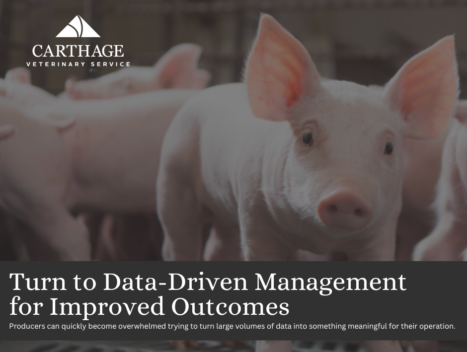
Turn to Data-Driven Management for Improved Outcomes

Producers can quickly become overwhelmed trying to turn large volumes of data into something meaningful for their operation. In some cases, that complexity is enough to discourage them from using data at all.

The solution is simpler than it seems: start with a clear goal. From there, work with a team that can help identify the specific data needed to move your operation toward that goal.

One of the most common misconceptions is that success requires collecting as much data as possible. In reality, better outcomes come from focusing on the right data and collecting it consistently and accurately. We’ve seen firsthand how even a limited dataset, when high quality, can drive meaningful improvements.

Equally important is making sure data collection fits into day-to-day workflows. When systems are designed so they don’t slow teams down and when team members understand why the data matters, they become more engaged. That alignment helps move the entire operation toward its goals.

Decide on Your Data

Ask ten producers which data points matter most, and you’ll likely hear ten different answers. That variability reflects the diversity of operations and priorities across the industry.

Feed-related metrics often take center stage—and for good reason, given their cost impact. But herd health data is just as critical. Insight into current health status and early signals of change can significantly influence performance and profitability.

Access to daily treatment and mortality data has improved dramatically in recent years. With real-time visibility, we can identify subtle shifts before they develop into larger problems. Those small changes are easy to miss when you’re in the barn every day, but the data doesn’t miss them.

Tracking the right metrics allows producers to move from reactive to proactive management. At a minimum, daily mortality should be monitored. Not long ago, this information was viewed mainly as a lagging indicator of loss. Today, it’s a powerful tool for predicting and preventing future issues.

Ultimately, what you track should tie directly to your goals and your ability to act on what the data tells you. For example, we consistently see that health at placement has a major impact on finishing performance metrics like average daily gain and feed conversion.

Data and Decisions

Rather than prescribing a one-size-fits-all tool, our Data Analytics team works within each producer’s existing systems. Because we support a wide range of platforms, we can adapt to how data is already being collected.

The swine industry is moving steadily toward more data-informed decision-making. Increasingly, we’re using existing data not just to understand what has happened but to anticipate what’s next. For example, producers can now plan marketing schedules with a high degree of accuracy using data they already have.

The biggest challenge isn’t collecting data—it’s turning it into action. There’s often a disconnect between the team generating the data and the team responsible for making decisions. Since most data originates at the farm level and passes through multiple layers, ensuring it reaches the right team member at the right time is essential.

Improving data flow gives producers and managers better visibility and allows them to respond more effectively. It’s simply an extension of the same mindset that drives success in other areas—using available information to make better decisions.

Creating Believers

As systems become better integrated (linking cost of production with revenue), producers are better positioned to make more informed operational changes.

Our role is to reduce the burden of analysis by delivering clear, actionable insights. From there, producers can decide how best to apply them within their business.

We’re already seeing measurable returns. In some cases, data-driven management has delivered up to $3 per pig, and those gains are likely to increase as analytics capabilities continue to evolve.

There are also some less tangible benefits: greater confidence, better visibility, and the peace of mind that comes from knowing key aspects of your operation are being monitored continuously. At the same time, these tools free up time and energy, allowing producers and their teams to focus on higher-value work.

Once producers see how effectively data can support decision-making (often with less effort than traditional approaches), they quickly become strong advocates.

RELATED NEWS